How the UK’s energy policy hurts Scottish business
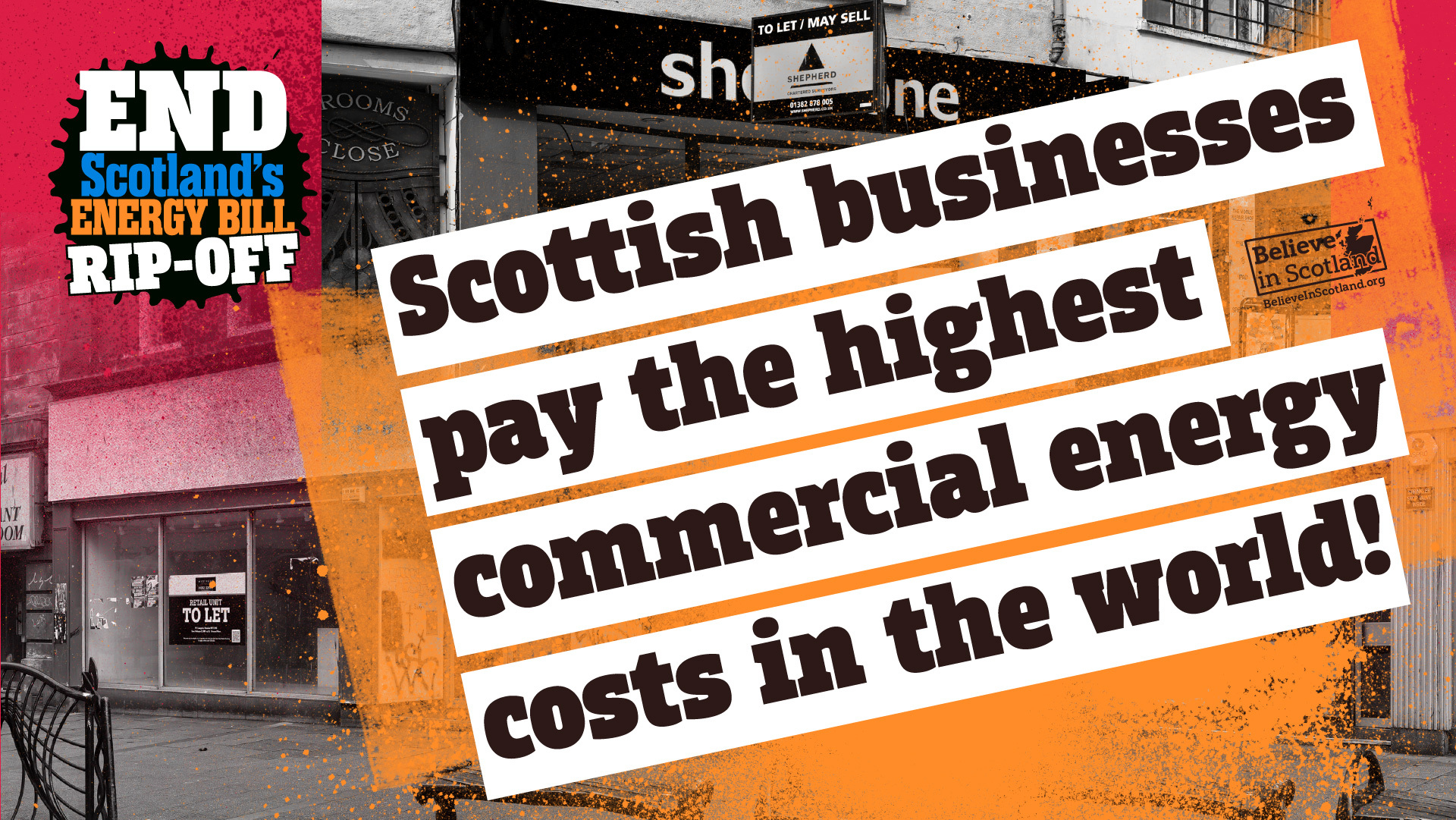
Scotland is an energy-rich nation, yet Scottish businesses face the highest energy costs in the developed world. That simple fact is holding back growth, investment and jobs.
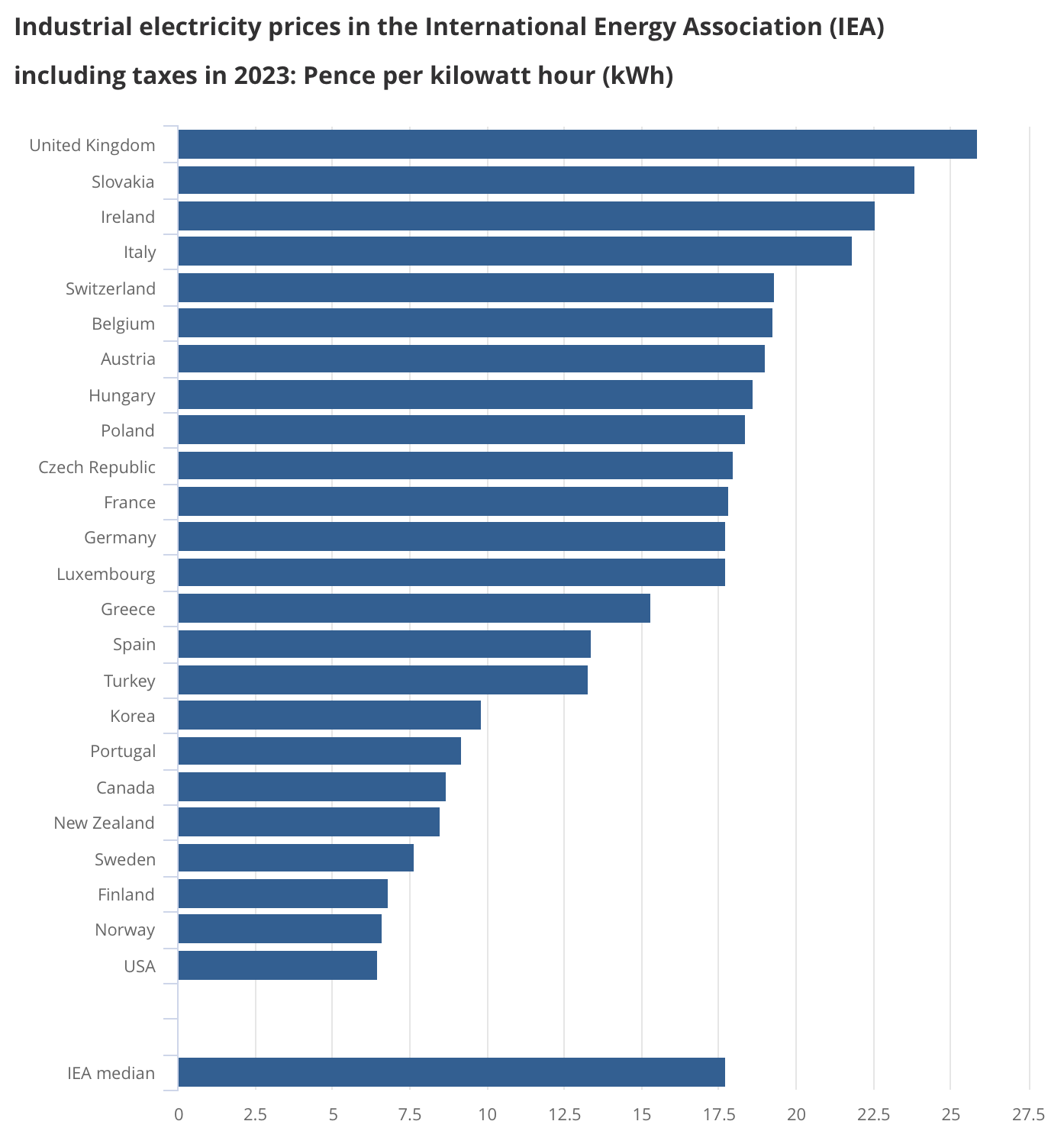
According to figures calculated by the respected International Energy Agency (IEA), UK businesses pay the highest commercial prices for energy in the developed world.
Scottish businesses typically pay almost four times more for energy than equivalent businesses in Norway. Norway, has a similar population to Scotland, similar geographic make up, has produced similar amounts of North Sea oil and gas and has similar renewable energy potential. All that makes Norway Scotland's ultimate energy benchmark.
But unlike Scotland, Norway is an independent nation and its energy policy is aimed at protecting the wellbeing of its own people and businesses and not on meeting the supply needs of a larger nation next door.
A fair energy policy would:
- Recognise Scotland’s enormous contribution to the UK’s green energy supply, which comes with significant inconvenience (turbines, pylons etc) but no benefits and in fact higher prices than the rest of the UK that Scotland energy resources subsidise.
- Offer a Scottish tariff rebate to reflect Scotland's high renewable exports to the rest of the UK
- Take account of Scotland's greater reliance on electricity (due to lack of gas mains in rural areas) and the fact that it is significantly colder.
But the UK Government sets energy policy and isn't fair on Scotland. The Labour UK Government has stated that it won't address this unfairness because they don't want London and the Midlands to pay more. To be clear, all the new windfarms being built in Scotland are not to supply the Scottish market but to supply England. That contribution to England's energy security is met only with higher prices in Scotland.
Without independence, it cannot fix the UK’s broken energy market.
An independent Scotland’s energy market (dominated by cheaper onshore wind generation costs) would be able to supply significantly more to Scottish customers than the broken UK energy market system does. The UK electricity (and energy) market works through a hugely unfair policy called marginal pricing which allows high cost gas power plants prices to drive up all electricity prices, even in Scotland when all of our domestic generation needs can be met from low-cost renewables. With the right investment in hydro storage (blocked by the UK government) none of that more expensive energy would be required. We have explained the marginal pricing system in more details in this earlier article: Scottish customers are being ripped off by the UK energy system
In an independent Scotland’s energy market where low cost renewables set the energy price and not expensive gas then the Norway example suggests that energy costs should be at least half what they are now and perhaps a third or a quarter of current prices.
An independent Scotland, able to invest in hydro and other storage capacity in the medium term would be able to reduce bills - significantly end fuel poverty and the anticompetitive impact on Scottish buisness. The way the UK system works is that the cost of maintaining and upgrading the system falls upon the customer and not the energy companies. This results in fuel poverty, inflation and slowed economic growth whilst channeling eyewatering profits to shareholders in the energy companies. This is basically an extortion pricing system and although that sounds like hyperbole others agree that the system is unfair.
Highest in the world?
It’s well documented that Scotland has higher standing charges than most of the rest of the UK maintaining that Scots are charged more overall by power companies. It's also well documented that UK businesses pay the highest commercial energy costs in the developed world but it's even worse for Scottish businesses.
What is less well known is that whereas the cost of supplying and distributing gas is spread across all UK consumers, regardless of location, the cost of supplying and distributing electricity has 'regional' variations with customers in the North of Scotland 'region' paying the highest charges in the UK. Now with 15% of Scotland not connected to the gas network, in rural areas and especially the highlands (where it is colder) Scottish households and businesses need to use electricity and so subsidises the UK National grid without being able to access cheaper gas heating and duel fuel deals from suppliers etc.
A Scottish Government report from before the energy cost crises, estimated that the additional energy bill cost for all households in Scotland beyond the gas grid is around £210 million and that doesn't include the additional costs to commercial customers in the same locations.
Electricity prices have soared
By late 2025, the average business electricity cost was 24–26p per kilowatt hour
Gas averaged around 7p per kWh. So it costs almost four times more to heat your home or business with electricity than gas.
This gap isn’t just market volatility. It’s designed into the UK’s energy system.
A flawed system that punishes Scotland
Westminster loads almost all the costs of decarbonisation, grid upgrades and policy levies onto electricity bills, while keeping gas cheap for political reasons. That hides the real savings renewables are delivering. Wind power alone has cut UK energy costs by £104 billion since 2010. It has saved even more by reducing the need for new gas plants.
The costs of developing the grid - and the profits and dividends that flow out to the multinationals that own the privatised system are piled onto electricity bills. That is a political decision ‘hammering the consumer to help the big energy firms’. Such costs could be shared between electricity and gas bills or paid for out of taxation as in other countries or a and here is a radical idea - the private energy companies could pay more to invest in their own infrastructure. Scotland, which relies heavily on electricity, gets punished.
Rural Scotland pays the most
Across Scotland, around one in five households has no access to mains gas. Businesses, from hairdressers to farms, suffer from the same policy. Areas off the gas grid include:
- Shetland & Orkney: 100%
- Western Isles: 88%
- Highland Council area: 62%
-
Argyll & Bute: 56%
Businesses are feeling the squeeze
Recent research found:
- 88% of Scottish businesses say high energy prices have negatively affected them
- 62% report a significant impact
- 72% say it’s restricting investment
- 66% say it’s affecting hiring
-
77% say they’ve had to raise prices
The Scottish Chambers of Commerce confirms energy bills are now a top-three concern for firms in every sector.
International comparison: how uncompetitive are we?
According to UK Government data (Q2 2025):
- Average Scottish non-domestic electricity price: 25p per kWh, rising to 27p
- Across Europe, the average is 16p per kWh (Eurostat)
- Finland is cheapest at 7p.
That means UK businesses pay 50–70% more on average than their European counterparts and Scottish ones even more once transmission and standing charges are added. No other advanced economy with Scotland’s natural resources makes its businesses pay so much for their own energy.
Norway again for example - Norway has five aluminum smelters, owned and powered by their hydro company which produces plentiful cheaper power with a low carbon footprint. Scotland has one aluminium smelter that has had struggles with energy costs which are now only mitigated by having a dedicated, co-located hydroelectric power source. That demonstrates that the Norwegian model would work here. Scotland was once a world leader in hydro but no longer thanks to UK Government policy choices that don’t support hydro.
Paying to waste our own power
While bills rise, Scotland is literally paying to waste energy.
Because the grid can’t move all our wind power south, turbines are often switched off and compensated through “constraint payments.”
- In the first half of 2025, Scottish wind farms were paid £117 million to switch off - around 37% of potential output.
-
Across the UK, wasted clean power totalled 4.6 TWh - enough to power every Scottish home for six months.
All these costs feed straight back into electricity bills and would be unnecessary if the UK government were not failing to financially support Scottish hydro storage development. Furthermore this extra charge would also be avoidable had decades of low grid investment not resulted from private ownership and underinvestment.
The structural unfairness
UK ministers rejected “zonal pricing,” which would make power cheaper where it’s produced.
They said it would be “unfair” to charge less in the Highlands - and that “no business would relocate there.” But making power cheaper where it is made is working to attract business in other countries such as Sweden, which is experiencing a “klondyke” effect.
But the current system is the real unfairness: it subsidises gas and penalises electricity, punishing Scotland in the process.
What an independent Scotland could do differently
Devolution cannot fix this. The energy market was designed under privatisation by governments Scotland didn’t vote for, and Holyrood has no power to reform it.
Scotland’s businesses are paying the price for a UK energy policy that removes the benefits of Scotland’s renewables, protects fossil fuels, and treats Scotland’s electricity production as nothing more than a tool to supply England's energy needs without any real community / national wellbeing benefit to Scotland.
UK government energy policy has created a system that exports Scotland’s power, wastes Scotland’s resources, and weakens Scotland’s competitiveness.
Until that changes or until Scotland can change it for itself, the UK’s energy market will go on hurting Scottish business, and damaging our economy and environment.
